
NHE6 Inhibition Could Help Prevent Late-onset Alzheimer’s, Researchers Say
Written by |
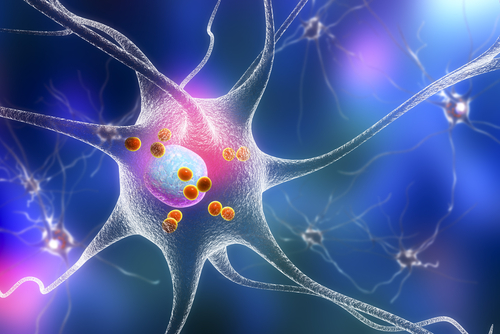




Inhibiting a protein called NHE6 is a potential strategy to prevent the damaging effect of ApoE4 and the associated risk of late-onset Alzheimer’s disease, a study suggests.
The study, “Reversal of ApoE4-induced recycling block as a novel prevention approach for Alzheimer’s disease,” was led by University of Texas Southwestern researchers and published in the journal eLife.
The ApoE protein is involved in the transport and metabolism of fatty molecules such as cholesterol. It is present in the human body in three major variants known as ApoE2, ApoE3, and ApoE4.
The ApoE4 variant is the second most common in the general population. However, evidence has demonstrated that ApoE4 protein is found more frequently in patients with dementia, being present in more than half of patients with Alzheimer’s disease.
Reports have suggested that the ApoE protein is involved in beta-amyloid protein clearance and burden, which is impaired in Alzheimer’s patients. It is thought that APOE gene variants can directly affect brain tissue, blood-brain barrier, and blood vessels, resulting in alterations of brain activity. The blood-brain barrier is a semipermeable membrane that separates the blood from the cerebrospinal fluid and protects the brain from the outside environment.
“If we can negate the ApoE4 process early, we may be able to prevent late-onset Alzheimer’s altogether for many people so that they will never get sick,” Joachim Herz, MD, professor at UT Southwestern Medical Center and senior author of the study, said in a press release.
In nerve cells, ApoE binds to a specific family of receptors, including one called Apoer2, which is found in the synaptic gap — the junction between two nerve cells that allows them to communicate — between neurons, where it regulates their activities.
Both ApoE and Apoer2 are taken into the cell within endosomal vesicles — membrane-bound compartments that regulate trafficking of proteins and lipids inside cells and a cellular structure essential for normal cell-to-cell communication.
Normally, the Apoer2 receptor is quickly recycled back to the surface of the cell; however, this process is delayed in people with the ApoE4 version of ApoE.
As endosomes move through the cell, the fluid inside becomes more acidic, which helps regulate their actions within cells.
Now, researchers hypothesized whether altering the acidity of vesicles in rat nerve cells could overcome the block in recycling Apoer2 — along with other receptors transported along with Apoer2 in the same compartments — in the presence of ApoE4.
A detailed analysis of this mechanism and the involved molecular partners revealed that a protein called NHE6 was being activated and was blocking normal endosome trafficking. This protein is present in the membrane of endosomes and acts to make the vesicles less acidic.
By blocking the activity of NHE6, either by using a selective chemical NHE6 inhibitor or silencing the gene that gives rise to the NHE6 protein, the team was able to lower the pH (increase the acidity) of these vesicles and reverse endosome blockage, even in the presence of ApoE4.
Also, treatment with the NHE6 inhibitor was able to prevent the damaging effects of beta-amyloid toxic aggregates induced by high levels of ApoE4 protein in mice, preserving the normal communication and function of brain cells.
“Our findings suggest a novel potential approach for the prevention of late-onset Alzheimer’s disease,” researchers stated.
Herz said, “Our approach in this study was to stop the overall degeneration process earlier; that is, before the formation of these [toxic protein] aggregates.”
The team is planning to explore the potential of NHE6 inhibition as an alternative strategy to treat Alzheimer’s disease. The next step will be to develop synthetic small molecule NHE6 inhibitors that can pass through the blood-brain barrier and reach the brain.
“The beauty of NHE inhibitors is that these are small molecules that can be produced inexpensively and thus made widely available, in contrast to the more elaborate antibody-based therapies that are currently being evaluated in clinical trials,” Herz said. “A simple pill could someday neutralize the risk of late-onset Alzheimer’s disease, just as readily available statins are able to reduce the risk of cardiovascular disease.”



Patricia Murphy
I would like to receive updates on current findings in Alzheimer's Disease research. Thank you.
Michael H. Lane
My wife was stricken with Alzheimer's in 2012 as a result of the scopolamine patch. We have visited John's Hopkins, Georgetown and multiple other hospitals. Over time things have gotten worse. She has had depression but that has improved somewhat with medication. She is 74 years old, has a Phd, retired from the Department of Treasury as a senior executive, worked with the big banks and Federal Reserve. Has always been in good health and physical condition. None of the medications except Effexor have provided any successful treatment. She remains with limited focus, does not ever really think, likes to help other people at the assisted living facility but things are not getting better and she now has hallucinations. I don't know where to go to get help or if there is any hope at all. Is there? How about ECT? She is physically active and otherwise in good health. We would appreciate any suggestions you could provide.
Brian Faris
to Michael: Don't know if you are doing anything other than meds but we have been using coconut oil, tumeric[circumin],cbd's,B12,magnesium l-threonate in conjunction with donepezil and minimum anti-depressant. My wife suffers from early onset alzheimers and we are at year three. The coconut oil seems quite important from my viewpoint and the cbd's really levelled out the high and lows. We are still looking for magic cure. Just started to incorporate essential oils, no opinion yet.Hope something may help
PAULINE GIAKOUMAKIS
how much coconut oil
mary
How do you buy coconut oil...liquid, solid form or?? Thank YOU! Good luck...I am in year 3 also...
Brian Faris
1 teaspoon in morning and we cook with it occasionally. It's not bad in coffee
Amor Indio
I would like to receive updates on current findings in Alzheimer’s Disease research. Thank you.